
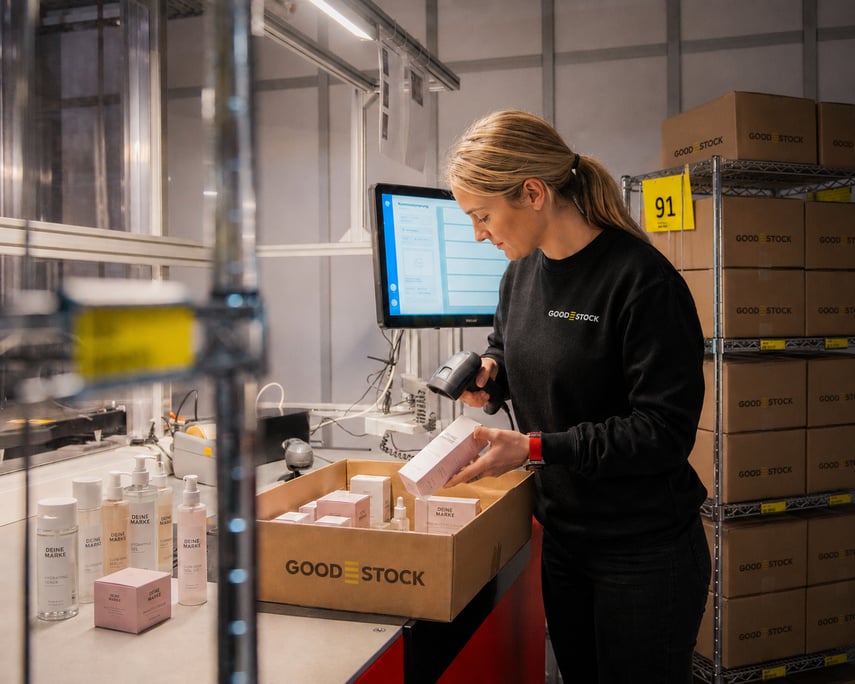
Barcode scanning verifies the item, storage location, and quantity directly during the process. This allows for faster detection of errors, ensures traceability of inventory movements, and reduces the need for manual entries. However, technology is no substitute for accurate master data: item numbers, barcodes, units, and storage rules must be maintained with absolute precision.
Product Lineup
Order Fulfillment:
Types, Process, and Automation
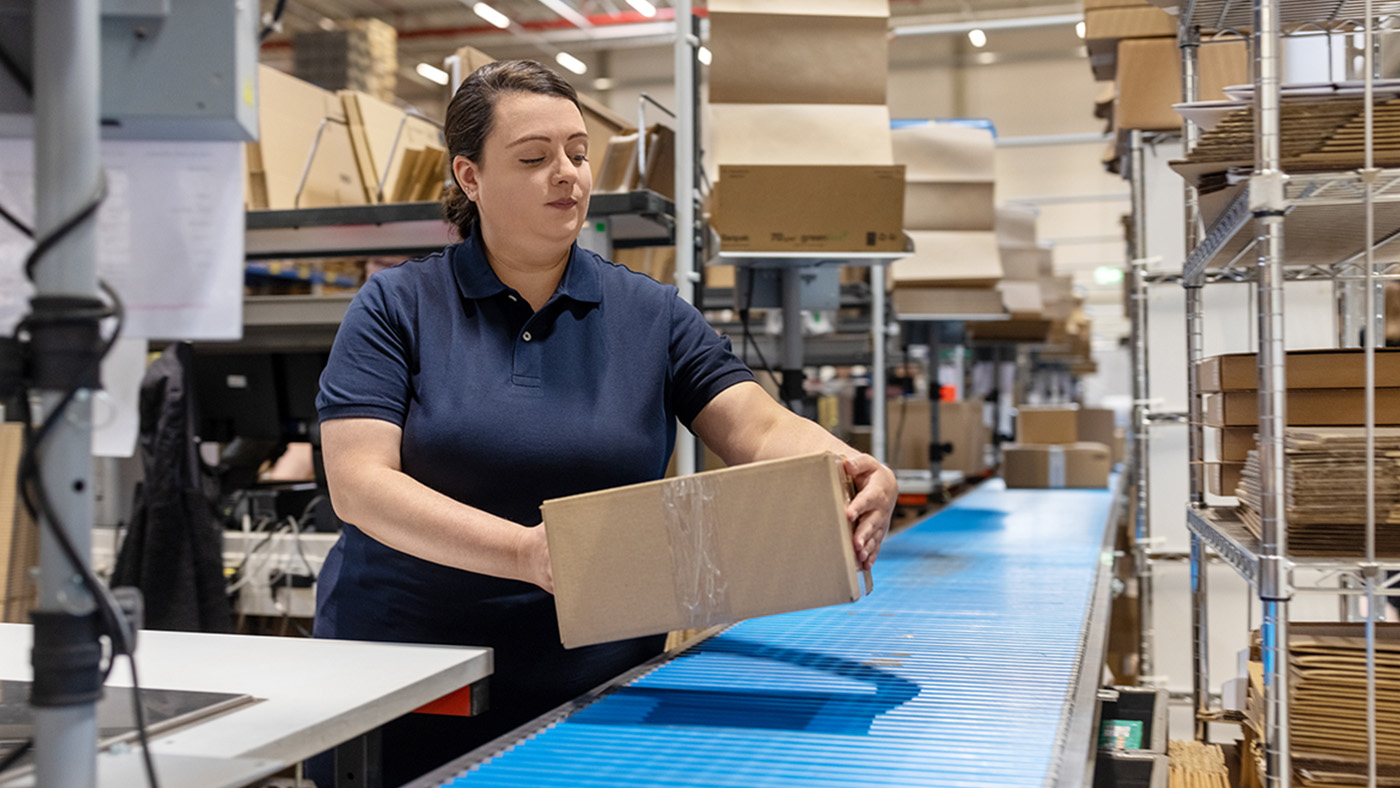
During order picking, items are retrieved from the warehouse and assembled to fulfill a customer or production order. It is one of the most important steps in fulfillment: Errors have a direct impact on delivery times, costs, and customer satisfaction. Clear data, appropriate warehouse structures, and reliable monitoring are therefore crucial.
Definition
What does "order picking" mean?
An order contains one or more line items with specific quantities. The picking process ensures that exactly these items are removed from the available inventory and assigned to the correct order. A single removal operation is often referred to as a “pick.” If an order contains three different items, at least three picks are usually required.
Procedure
Here's how the picking process works
Order
The order is transferred from the store, marketplace, or ERP system to the warehouse management system.
Exam
The system checks inventory and reservations and generates a picking order.
Merger
Employees or automated systems assemble the items needed for the order.
Control
Items and quantities are verified by scanning or another verification method.
Handover
The entire order is transferred to the packaging, assembly, or shipping department.
Overview
What are the different types of order picking?
Person-to-Goods
Employees walk to the storage locations and retrieve the items. The process is flexible, but it can be time-consuming if distances are long or volumes are high.
Goods-to-Person
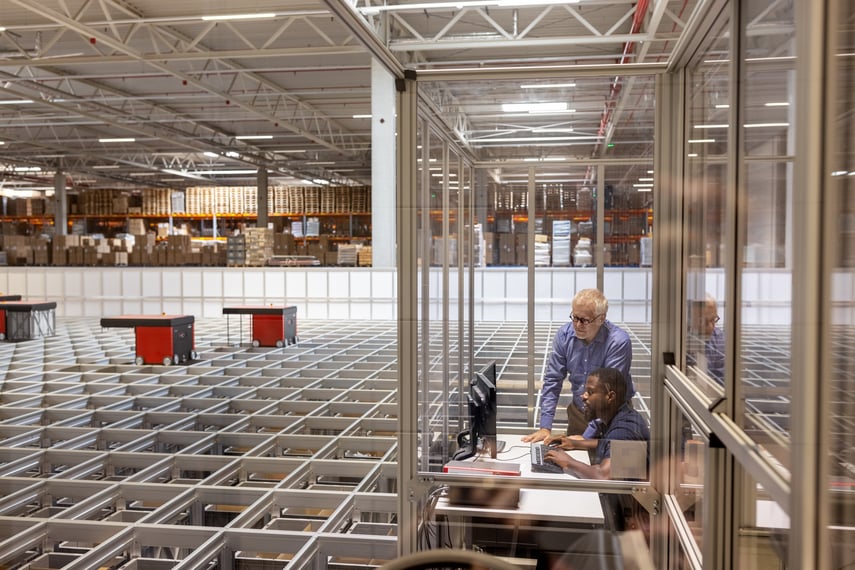
Automated systems deliver the required containers or items to a workstation. Walking distances are reduced, and repetitive processes can be standardized. AutoStore operates according to this principle.
Single-stage and multi-stage
In single-stage picking, items are assigned directly to a specific order. In multi-stage picking, items are first collected across orders and then distributed. Which method is best depends on the product range, order structure, and volume.
Why is scan-based order picking important?
Order Picking with AutoStore
In AutoStore, items are stored in bins. Robots transport the required bins to the ports, where orders are processed using a scan-based system. GOOD-STOCK uses approximately 40,000 bins, 15 ports, and 50 robots in Berlin. Combined with standardized processes, GOOD-STOCK achieves a picking accuracy of 99%. For products outside the system, supplementary storage and picking processes can be used.
Parameters
Key Metrics
1
Picking accuracy:
Percentage of items picked correctly
2
Picks per hour:
processed picks per unit of time
3
Lead time: The time from order receipt to handoff to the next process
4
Error rate:
incorrect items, quantities, or allocations
5
Inventory Accuracy:
Consistency Between System Inventory and Actual Inventory
In-house or Outsourcing
When should order picking be outsourced?
Outsourcing can be a good idea when your own facilities or teams reach their limits, product variants and orders increase, or seasonal peaks regularly generate additional workload. A service provider should not only cite high theoretical performance but also explain how products, special cases, controls, and data are handled in a specific setup.
FAQ
Frequently Asked Questions
A pick is the removal of a specific quantity of items for an order. The number of picks affects the effort and cost of order fulfillment.
Pick & Pack combines the process of picking items with the subsequent packaging and preparation for shipment.
No. An item’s size, weight, characteristics, and frequency of access determine whether it can be stored in bins. Other products are handled through supplemental storage areas.
We're here for you
Setting Up a Scalable Picking System
We review product structure, order data, picks, and peaks, and use this information to develop a suitable fulfillment setup.
Get Started Now
Do you have any special requirements?
Whether it's fashion, food, or electronics—let's talk about how we can optimize your process.