
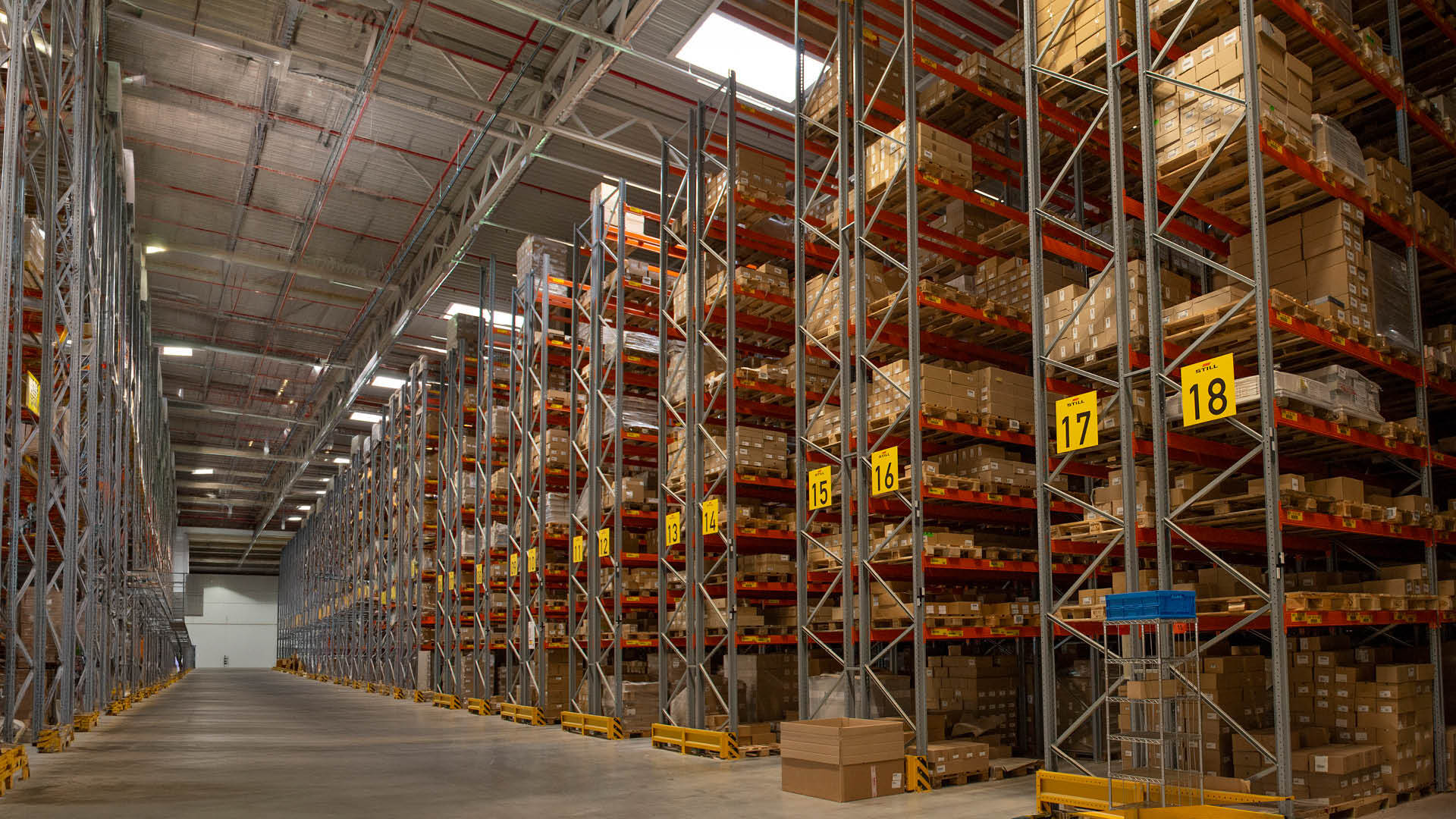
Chaotic Warehousing: Advantages and Implementation of the Open-Shelf System
Efficient Warehouse Organization Through Chaotic Warehousing
Efficient warehousing is a critical factor in the smooth operation of businesses that deal in physical goods. A well-organized warehouse not only enables optimal use of available space but also helps shorten delivery times and increase customer satisfaction. In this context, chaotic warehousing is gaining increasing importance, as it can offer several advantages over traditional, orderly approaches. A central element of chaotic warehousing is the free-space system, which allows goods to be stored flexibly without fixed assignments.
Key Terms in Chaotic Inventory Management, Explained Simply
Chaotic Inventory Management
In chaotic warehousing, goods are not stored according to predefined criteria, such as item number or product category. Instead, goods are placed in available storage locations as soon as they become available. The idea behind this is that products that arrive first in the warehouse are also the first to be removed (first-in, first-out, or FIFO principle). This ensures a steady turnover of goods.
Dynamic Inventory Management
Dynamic warehousing is particularly widespread in highly automated warehouse systems. Modern warehouse robots and automated conveyor systems make it possible to place goods quickly and precisely in available spaces. This increases the speed of putaway and order picking, thereby contributing to efficient warehouse logistics.
Open-Seat System
The Differences Between Chaotic and Organized Storage
Chaotic warehousing and organized warehousing are two fundamentally different approaches to organizing goods in a warehouse. Both warehousing strategies have their advantages and disadvantages and are suitable for different companies and industries.
In chaotic warehousing, goods are placed in the warehouse without a fixed order or structure. As mentioned earlier, there are no predefined storage locations for specific items, and placement follows the “first in, first out” (FIFO) principle. This allows for a high degree of flexibility and adaptability to changing inventory structures. Chaotic warehousing is particularly well-suited for companies with a broad product range and frequently changing inventory levels.
An example of chaotic warehousing would be an online retailer that sells a wide variety of products, including electronics, clothing, and household goods. Upon arrival at the warehouse, goods are placed in available storage locations without being assigned to specific shelf locations. When a customer orders a product, a warehouse employee retrieves it from any available storage location.
In contrast, in organized warehousing, goods are placed according to a predefined system. Items are sorted based on specific criteria such as item number, product category, or sales frequency and have fixed storage locations. This makes it quick and easy to locate products. Organized warehousing is particularly suitable for companies with homogeneous products and high picking frequencies.
An example of organized warehousing would be a wholesale company that sells only a few items in large quantities. The goods are sorted by product category and have fixed shelf locations. When a customer places an order, the desired product can be quickly and accurately located and shipped by a warehouse employee.
The Pros and Cons of Chaotic Warehousing
Advantages of chaotic warehousing:
- High Flexibility: Chaotic warehousing allows products to be stored in any available space. This makes it possible to effectively utilize gaps in the warehouse and ensures a high degree of flexibility in both putaway and retrieval.
- Efficient use of space: The free-space system allows for optimal utilization of available warehouse space, since goods are not tied to fixed locations. This enables warehouse capacity to be better utilized.
- Simple warehousing: Chaotic warehousing requires less administrative effort, as there is no need to maintain a fixed order. This simplifies warehouse processes and saves time and resources.
- Quick Access to Items: Since goods can be stored in various locations, product retrieval can be organized more efficiently. Items can be placed closer to the shipping area, which reduces picking times.
- Quick product integration: Chaotic warehousing allows for rapid adaptation to changing inventory structures and easy integration of new products into the warehouse.
Disadvantages of disorganized inventory management
- Search Times: One potential drawback is that searching for specific products may take longer because they are not located in fixed positions. However, this issue can be mitigated by using efficient warehouse management software.
- Susceptibility to Errors: Without a clear structure and fixed storage locations, there is an increased risk of errors when putting goods into or taking them out of storage. Mix-ups or misplaced products can lead to delays and errors in shipping processes.
Practical Implementation of the Chaotic Storage System
Implementing a chaotic warehouse system requires thorough planning and preparation.
Some practical steps for successful implementation include:
Analysis of the Product Inventory and Warehouse Processes
Warehouse Space Optimization
Use of Warehouse Management Software
Employee Training
Summary and Conclusion
Chaotic warehousing using the free-space system offers a modern and efficient solution for companies with variable inventory levels. Flexibility, high space utilization, and simplified warehouse management are key advantages of this approach.
However, the decision to adopt a specific warehousing system depends on various factors, including the type of products, storage capacity, and the company’s requirements. A thorough analysis is crucial for selecting the right warehousing system and ensuring efficient warehousing operations.
Do you have any special requirements?
Whether it's fashion, food, or electronics—let's talk about how we can optimize your process.